
articles
Go Back-
Articles > Can NHS Trusts Meet Elective Care Targets?
Can NHS Trusts Meet Elective Care Targets?
Improving patient access to timely care and enhancing productivity are central to the NHS’s 2025/26 priorities and operational planning guidelines and in meeting elective care targets.
From an elective care perspective, one of the key targets is to have 65% of patients waiting no longer than 18 weeks for treatment by March 2026. We caught up with Four Eyes Insight Managing Director Lee Scothern to find out what this truly means for planned services and if it is achievable.
“Reducing the proportion of people waiting more than 52 weeks for treatment to less than 1% of the overall waiting list by March 2026, while also meeting a national objective of 65% for patients waiting no more than 18 weeks, is an ambitious but essential goal.
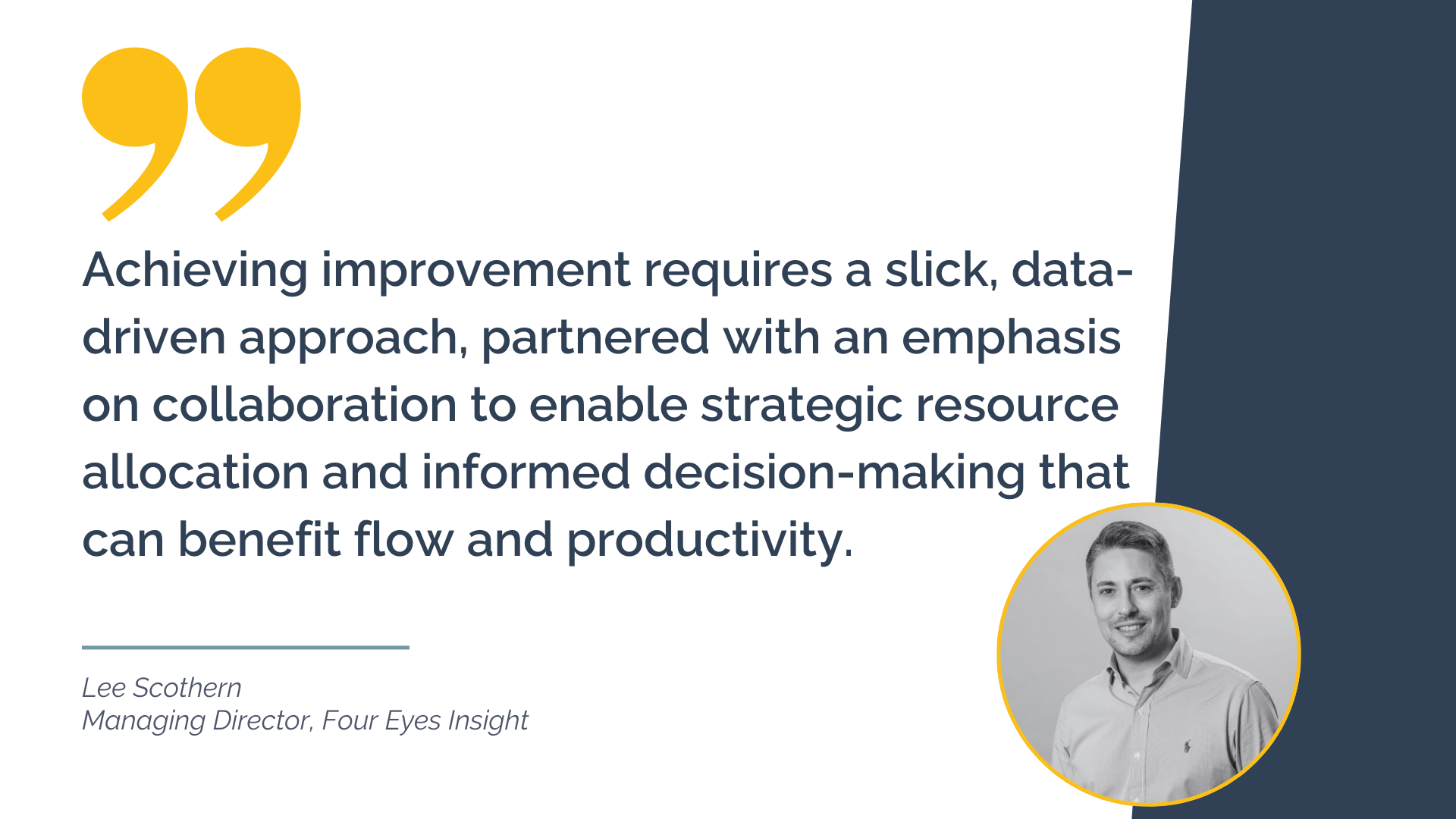
To improve patient care and restore public trust in our healthcare system, each trust must commit to at least a 5% improvement. Achieving this requires a slick, data-driven approach, partnered with an emphasis on collaboration across departments, NHS Trusts, and systems to enable strategic resource allocation and informed decision-making that can benefit flow and productivity.
An additional goal is to increase the percentage of patients receiving a first outpatient appointment within 18 weeks to 72% by March 2026. This objective demonstrates the NHS’s commitment to providing timely access to healthcare treatments. To make this possible, each trust must have a comprehensive understanding of clinic capacity—both slots and outpatient estate. Aligned with demand, this will help trusts understand the situation at hand and develop targeted improvement strategies to address it as part of their improvement process.
The NHS’s guidance also emphasises the adoption of emerging technologies, including AI and machine learning, to enhance patient care and operational efficiency. At Four Eyes Insight, we understand how crucial trust data is when trying to tackle the challenges of backlog clearance and optimise elective pathways. Utilising technology can help NHS Trusts to plan, align demand with capacity, highlight improvement trajectories, and achieve sustainable improvement and long-term cost savings.
Meeting these ambitious targets will require a concerted effort across trusts, underpinned by data, technology, and strategic planning. While the challenges are significant, with a structured and collaborative approach to capacity planning and process optimisation, these targets are achievable.”
Follow us on LinkedIn to learn more about how Four Eyes Insight can support NHS Trusts in making targets achievable.